<By Bike>
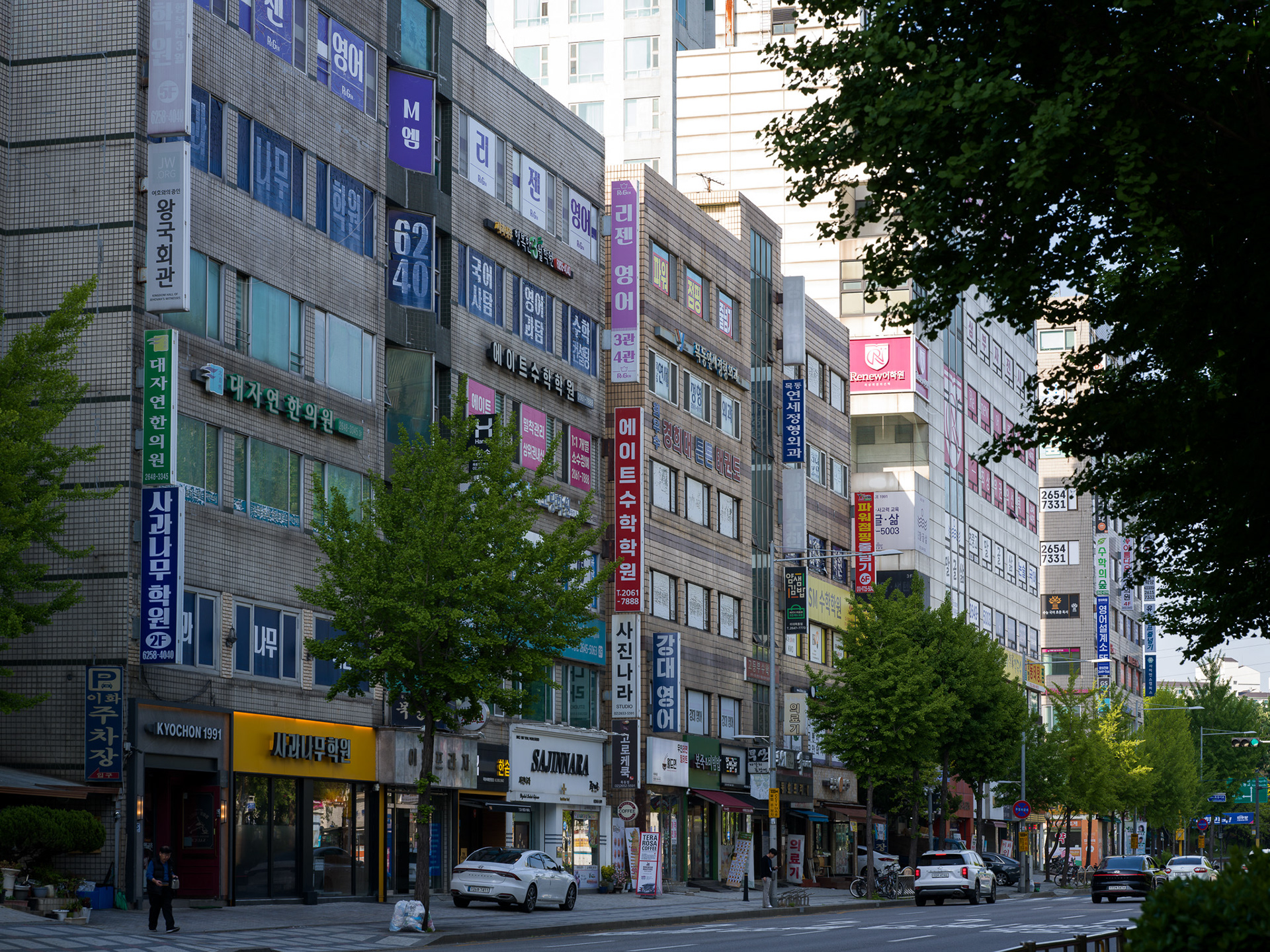
I moved to Mok-dong at the age of eight for academic reasons and have lived there ever since. One of the first things I learned after moving there was how to ride a bicycle. In Mok-dong, where private academies are densely concentrated and many roads are narrow, bicycles were the most efficient means of transportation for students. More than that, they functioned as tools that made the dense rhythm between school, home, and academies possible.
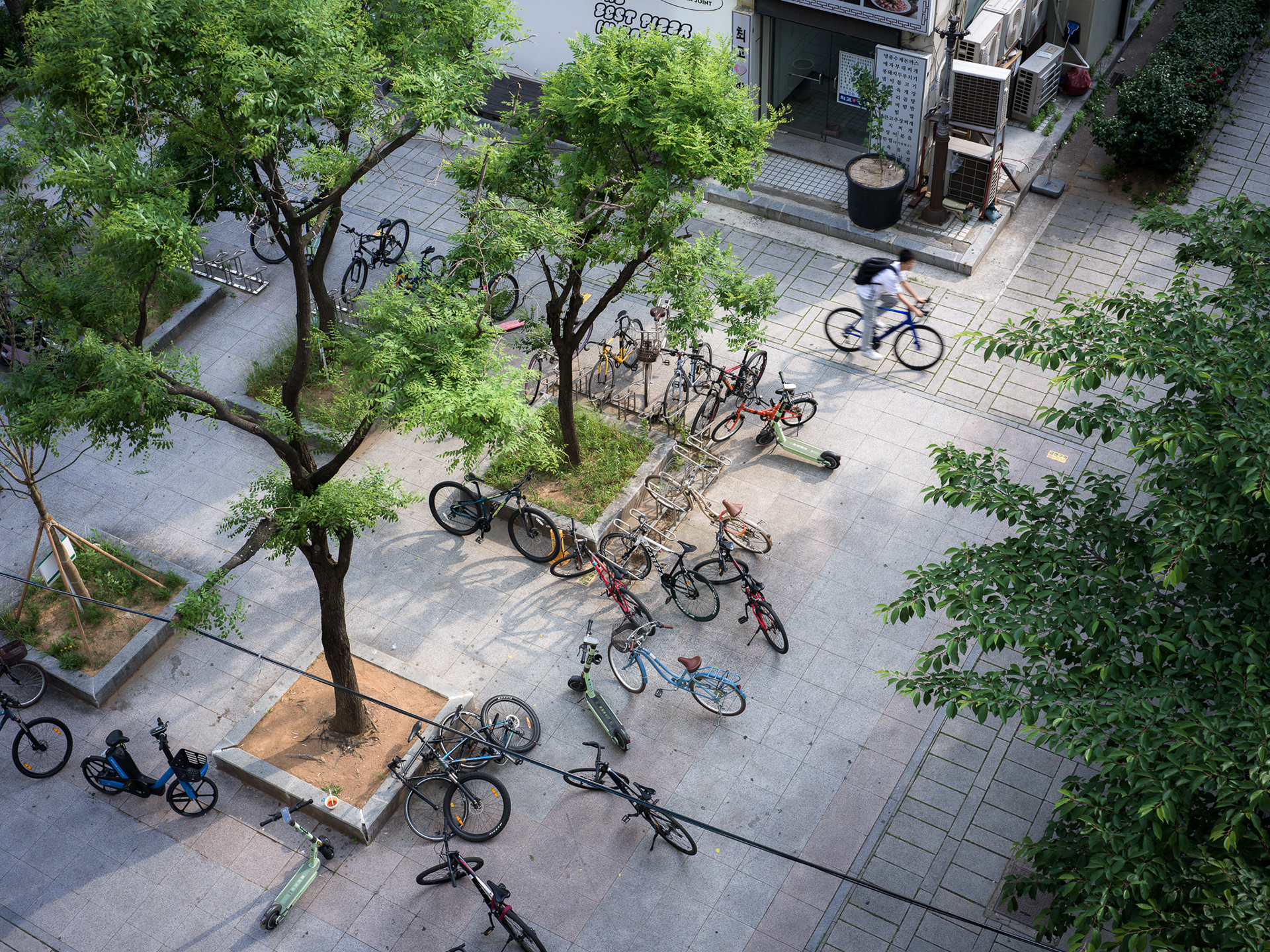
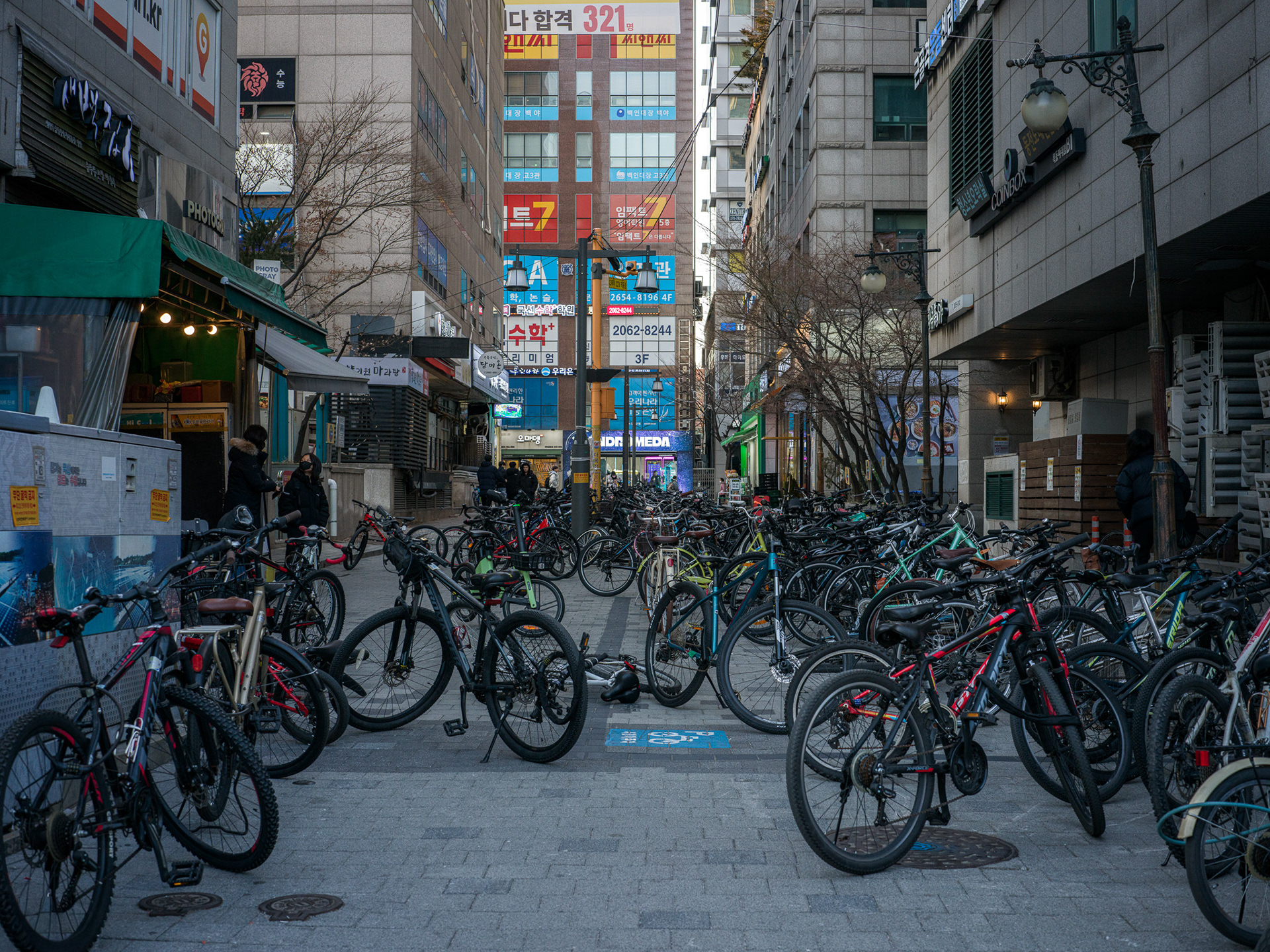
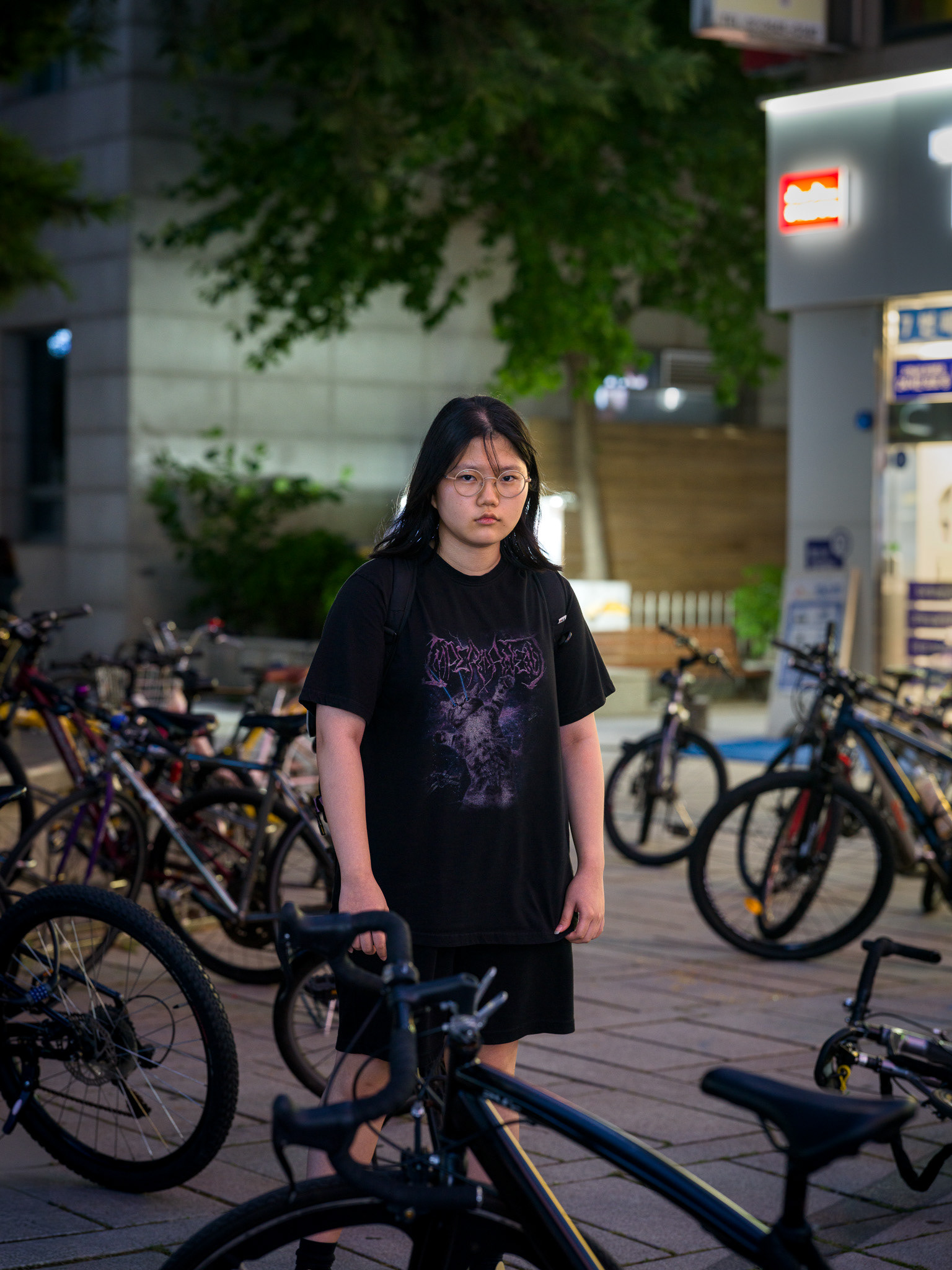
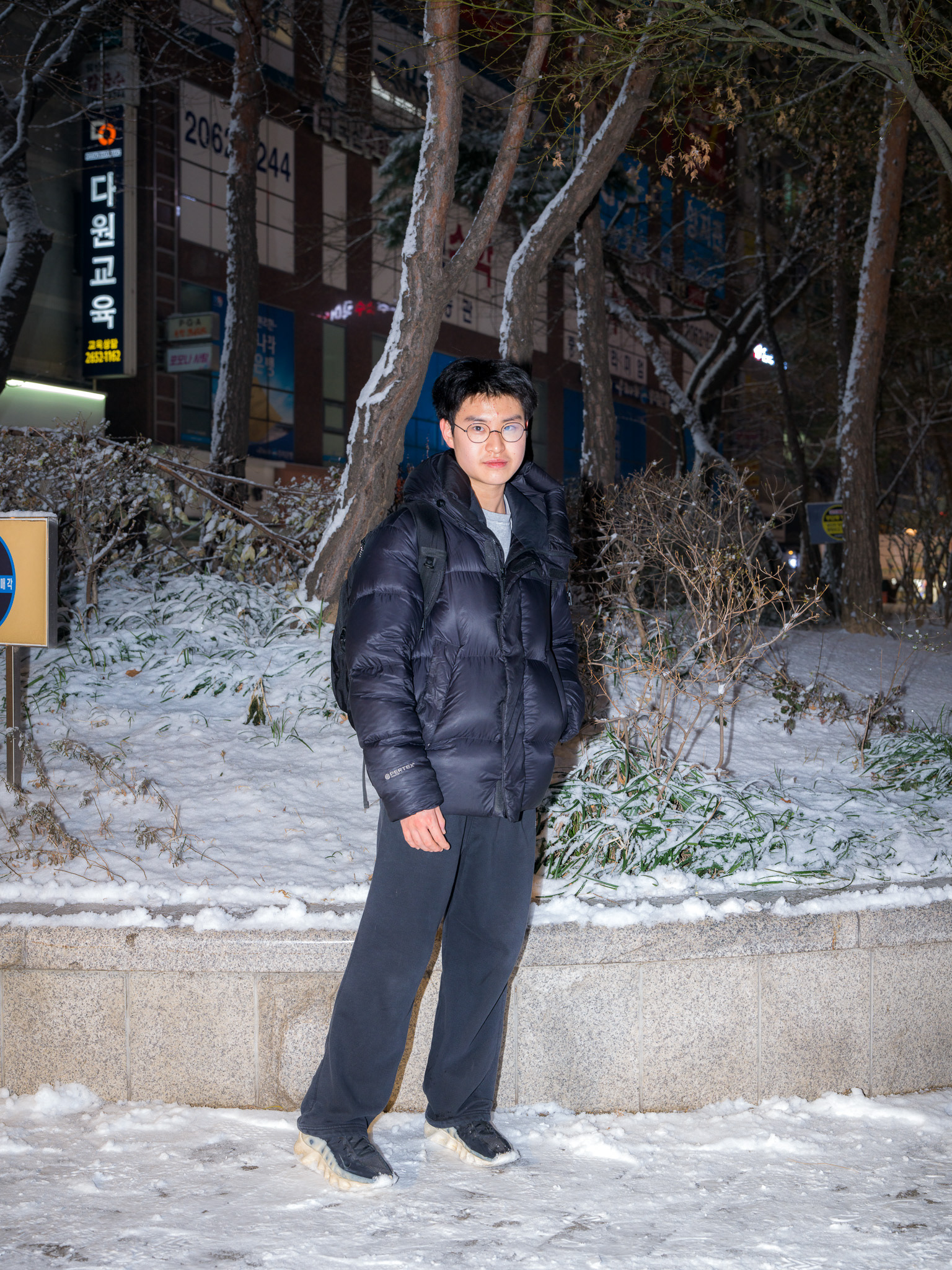
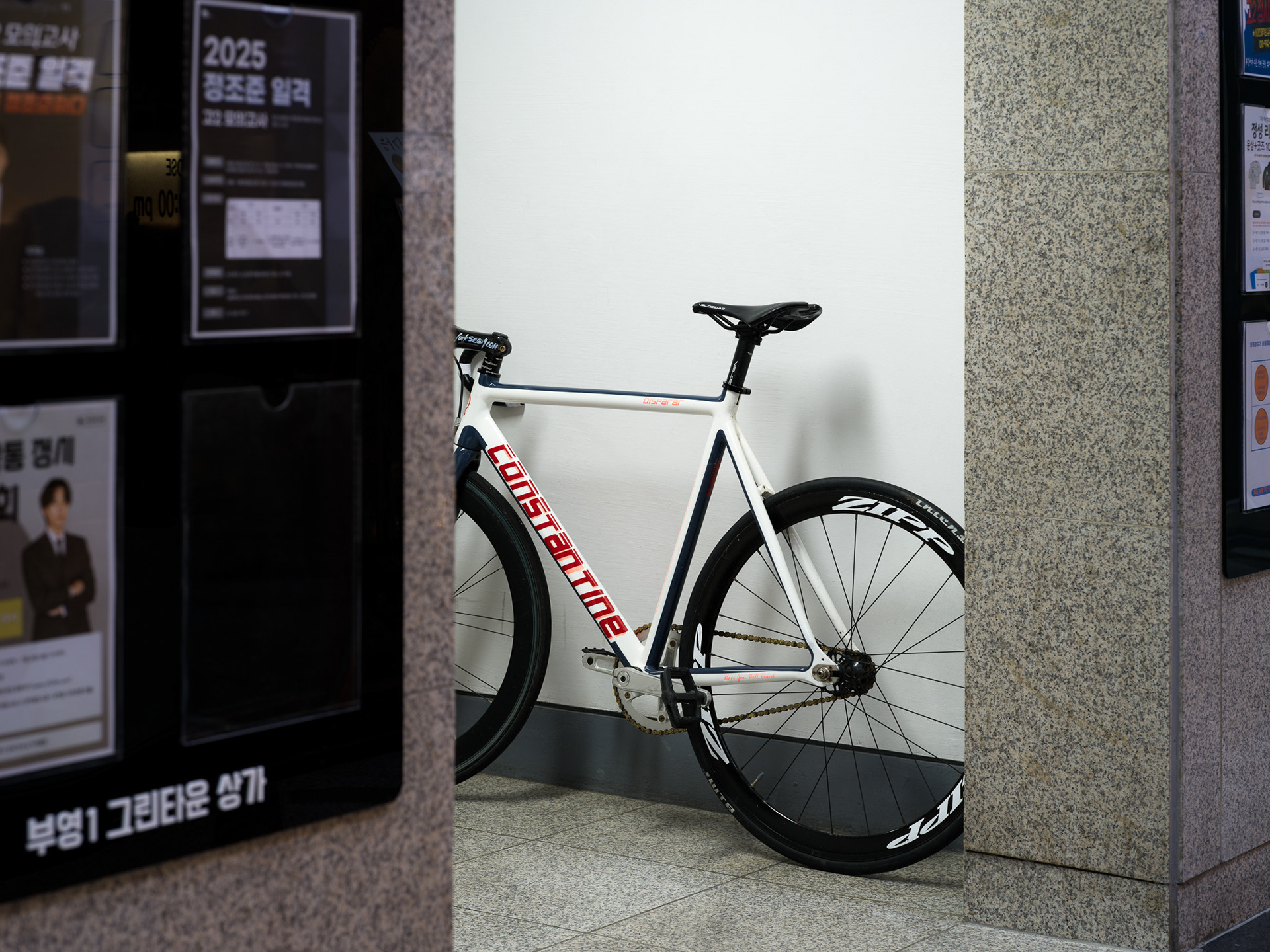
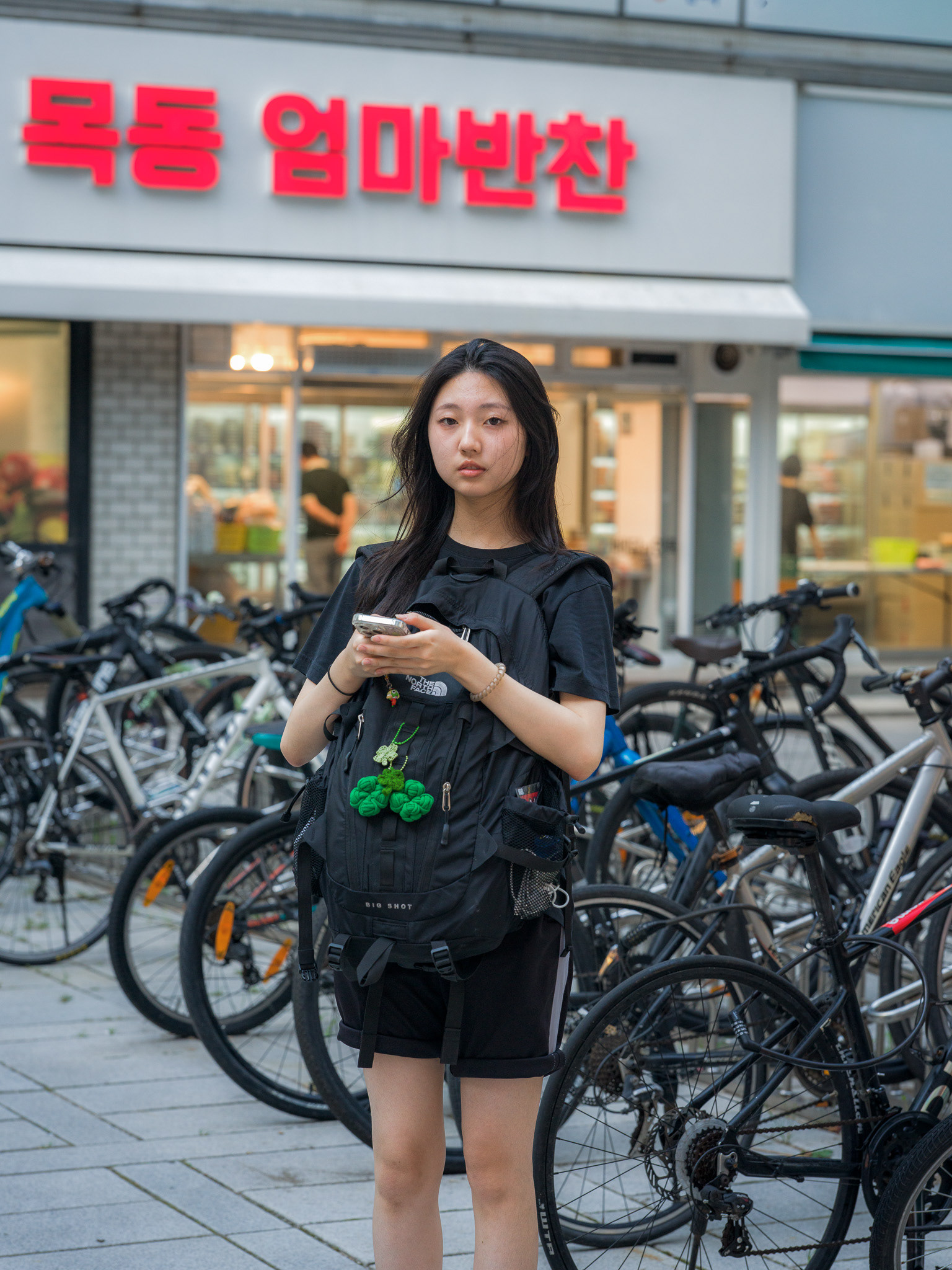
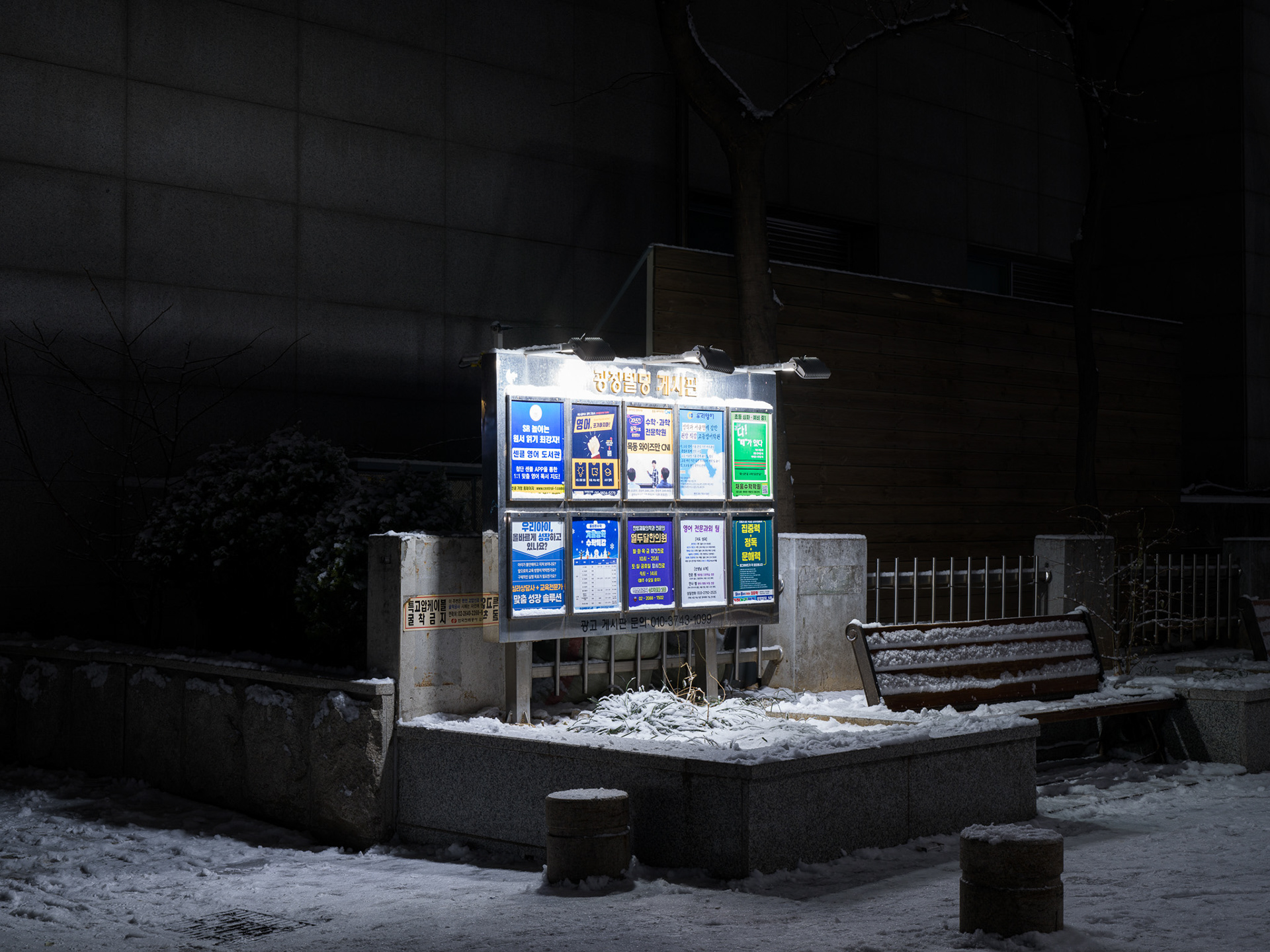
As I rode through the neighborhood, I was surrounded by academy advertisements using words like “advanced,” “intensive,” and “special lecture.” After school, students flooded the streets at the same time, each heading to a different academy. The bicycles gathered outside these buildings on weekday evenings became the clearest image of that movement. At some point, those bicycles began to look like students to me: tightly packed, entangled, and forced to push against one another in order to move.
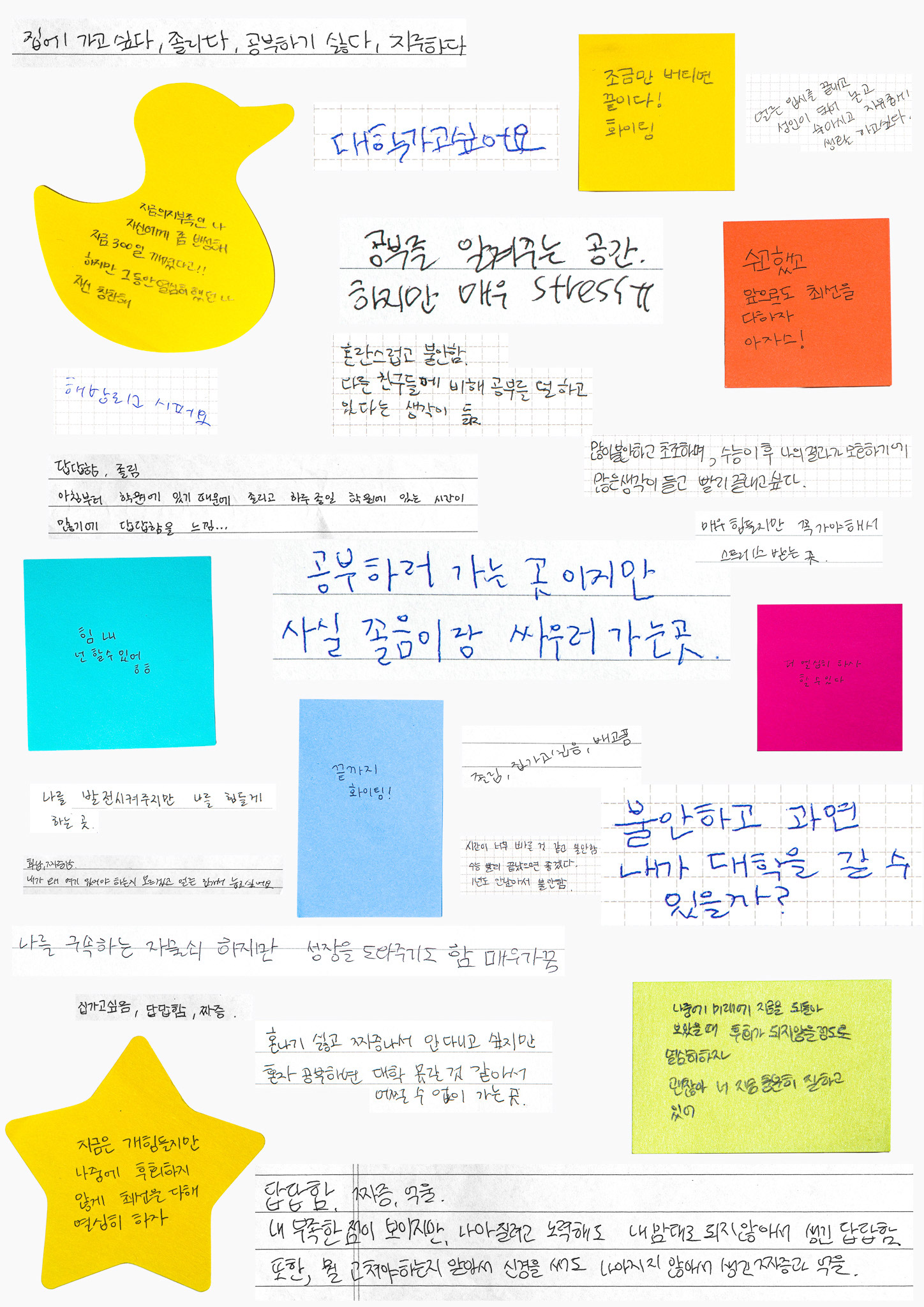
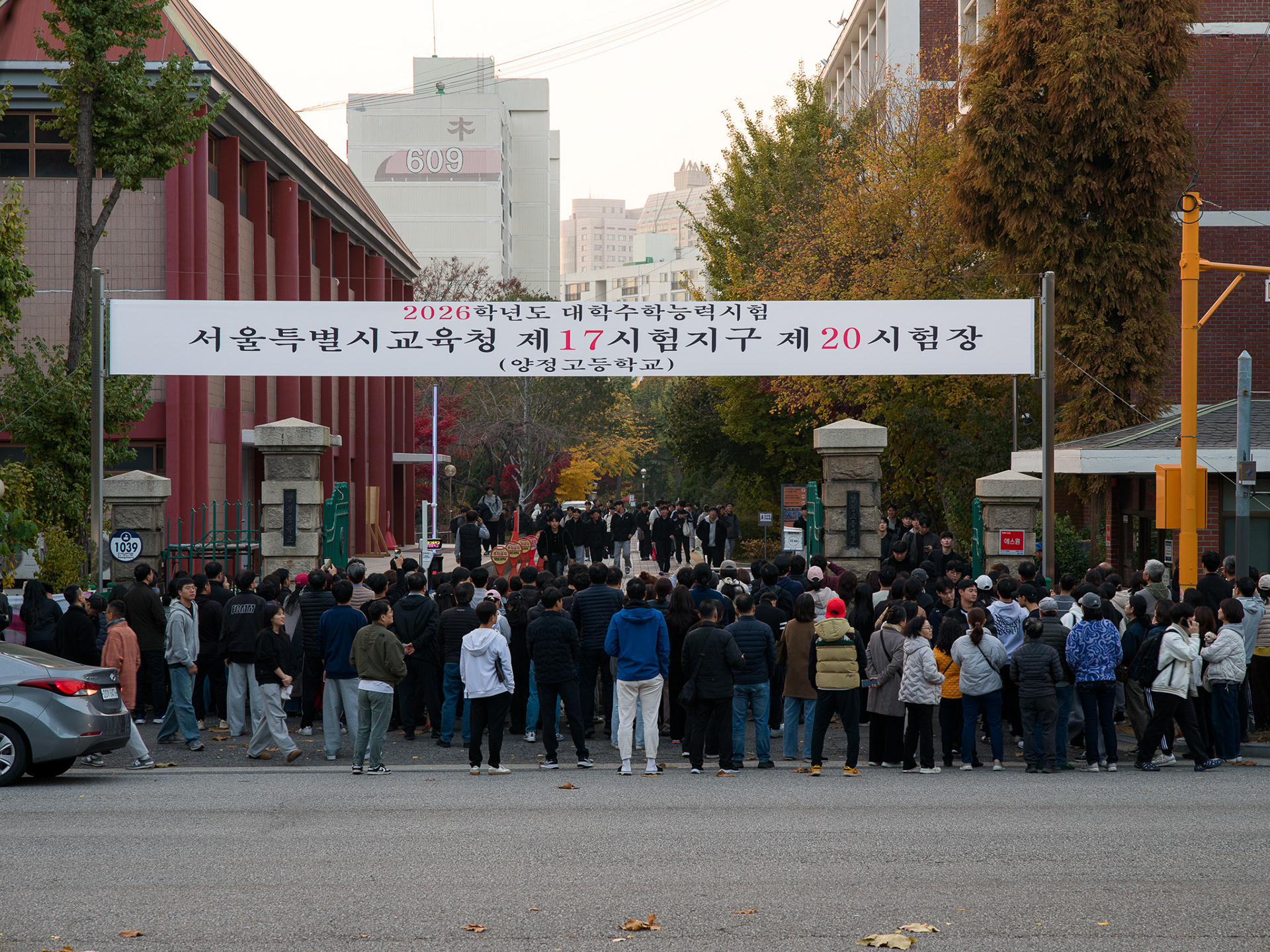
For many students, Mok-dong is not a place they want to remain in. Although familiar, it is also a place they want to leave behind. Once entrance exams are over, students seem to disappear from the neighborhood like an outgoing tide.
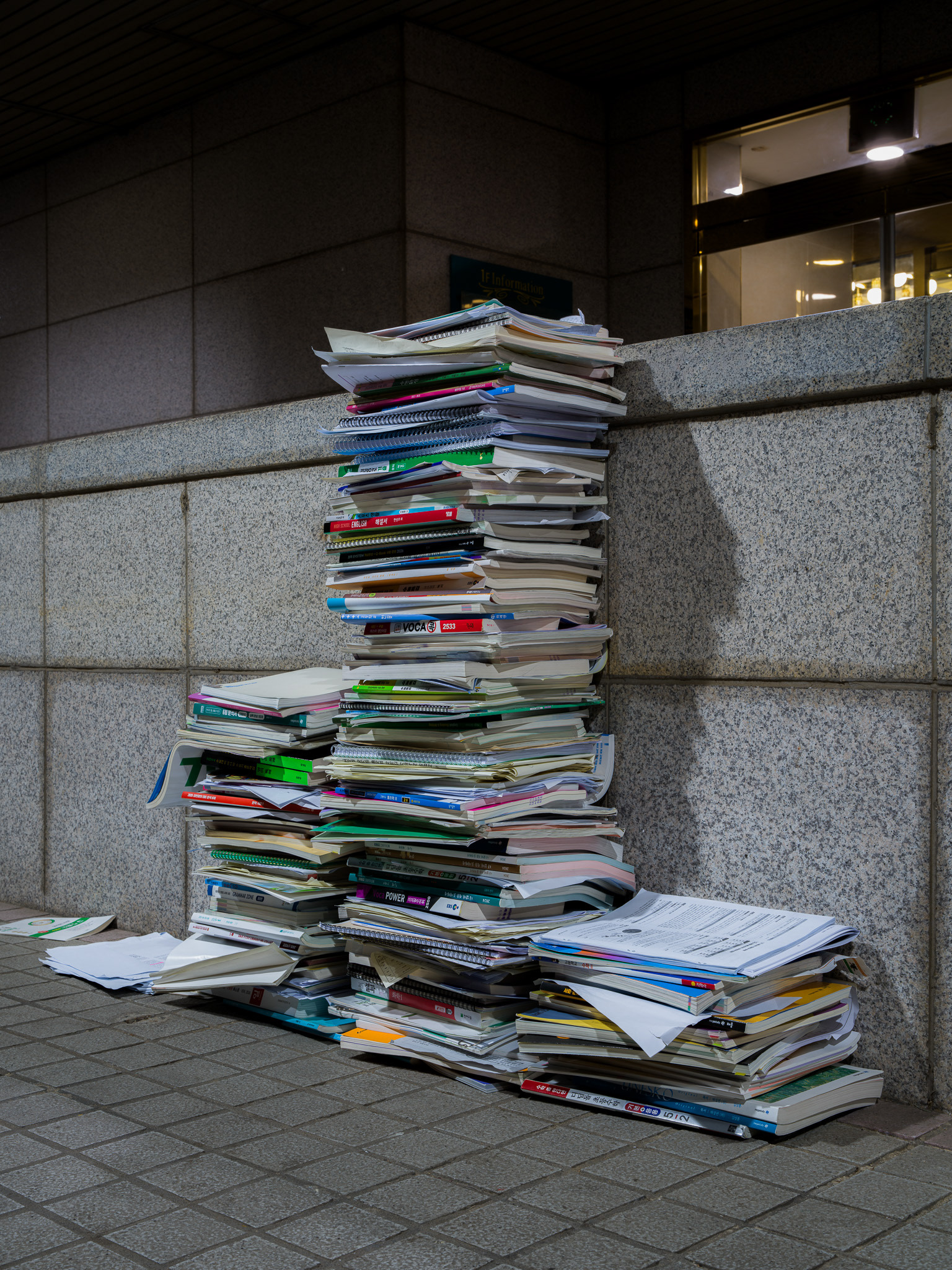
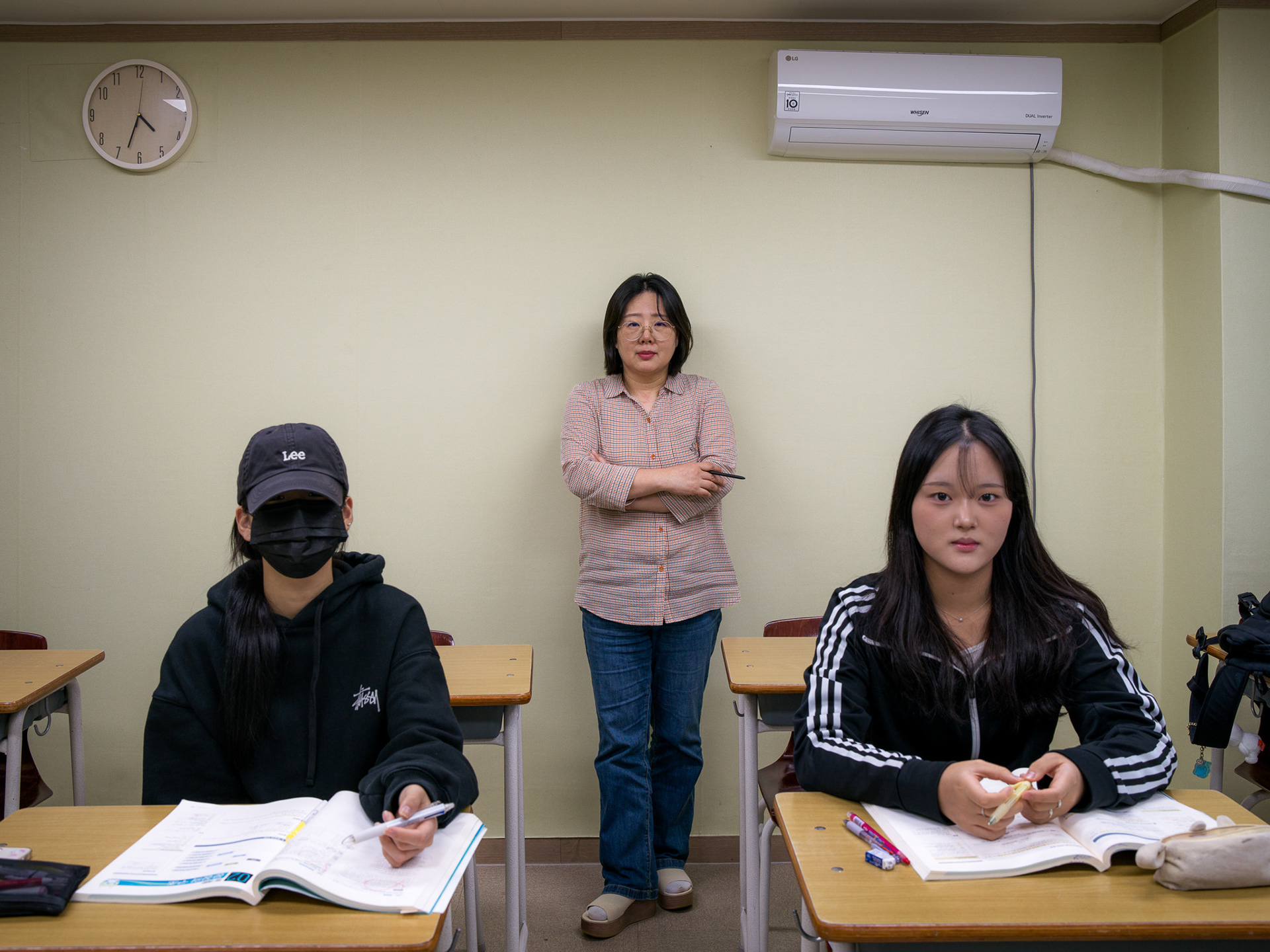
When I looked again at Mok-dong after entering university, the landscape appeared differently. The students’ movements, their repetitive schedules, the structures that divided them by performance, and the bicycles filling the streets no longer felt like separate scenes, but parts of the same system. While this work begins with the specific landscape of Mok-dong, it also reflects on how contemporary private education organizes students’ time, movement, and everyday life.